Most brokers evaluating a white-label crypto exchange spend their diligence budget on liquidity sourcing, custody, and compliance tooling. The matching engine — the component that actually decides whose order fills, at what price, and in what order — gets a line item and little else. That’s backwards. Everything downstream of the matching engine, including the liquidity you’ve paid for and the risk controls you’ve configured, depends on how that engine behaves under load.
This isn’t a theoretical concern. It’s the difference between an exchange that holds its spreads during a volatility spike and one that produces client complaints, chargebacks, and a support queue that doesn’t clear until Monday.
The Financial Impact of Getting This Wrong
Consider an exchange operator running 2,500 active crypto traders with average daily notional volume of $8 million. During a normal session, order flow is manageable — a few hundred orders per second at peak, well within the tolerance of almost any matching engine on the market.
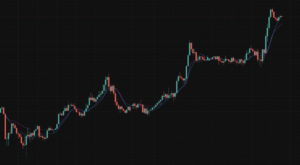
The problem surfaces during correlated volatility events: a major token delisting rumor, a macro data print, a whale liquidation cascading through perpetuals. Order flow can spike 15-30x above baseline in these windows — exactly the moment clients need reliable execution and exactly the moment a weak engine degrades. A queue that adds even 200 milliseconds of latency under load turns a fillable limit order into a rejected one. At scale, that’s measurable in lost fills, not just annoyance.
Run the numbers on a single bad event: if 5% of orders during a volatility spike fail to execute or execute at a materially worse price due to engine lag, and the exchange processes $500,000 in notional during that 20-minute window, the realized slippage cost to clients — and the resulting support tickets, chargebacks, and churn — can run into the tens of thousands of dollars. Multiply that across a handful of volatility events per quarter and the matching engine stops being an infrastructure footnote and becomes a P&L line.
The cost doesn’t stop at the immediate slippage. Every failed or poorly filled order during a high-visibility volatility event generates a support ticket, and support tickets during exactly these windows are the most expensive to resolve — clients are frustrated, the event is fresh, and screenshots of a competitor’s clean execution during the same window are already circulating in trading communities. A broker’s crypto desk can absorb a mediocre matching engine for months of quiet trading and then lose a meaningful share of its most active traders in a single bad afternoon, because active traders are precisely the segment most likely to notice execution quality and most likely to have accounts open elsewhere to compare against.
There’s also a second-order cost that’s easy to miss in the initial diligence phase: engine weakness under load doesn’t stay contained to the crypto book. On a multi-asset platform where FX, CFD, and crypto share infrastructure or reporting layers, a crypto matching engine that falls behind during a spike can delay exposure updates across the shared risk dashboard, meaning your risk desk is working from stale data for FX and CFD positions at the exact moment market-wide volatility makes accurate exposure data most critical.
Why Most Brokers Miss This
The reason matching engine quality gets under-scrutinized is that it performs identically to a weak engine 95% of the time. Under normal, low-volume conditions, almost any engine on the market processes orders correctly and quickly enough that the difference is invisible. Brokers doing vendor diligence tend to test with demo accounts and light order flow — precisely the conditions where engine quality doesn’t matter.
The failure mode only appears under load, and by the time an operator discovers it, clients have already experienced it. This is the inverse of most technology diligence problems, where issues surface early and get fixed before launch. Matching engine weakness is a landmine that detonates during your highest-volume, highest-visibility moments.
The Opportunity: Engine Quality as a Retention Lever
Framed correctly, matching engine architecture is not a cost center to minimize — it’s a competitive differentiator that most competitors aren’t marketing because most competitors haven’t tested it under real stress. A broker who can credibly say “our exchange holds execution quality during volatility” is making a claim that active crypto traders — the segment most worth retaining — actually value and actively test for by placing orders during known volatile windows.
This matters more as multi-asset brokerages compete for the same traders who already run FX and CFD books elsewhere. Those traders have a baseline expectation for execution reliability from their primary platform. A crypto exchange that can’t meet that bar becomes a liability to the broker’s overall retention, not just a standalone product line.
There’s a compounding effect worth naming explicitly: traders who experience clean execution during a volatile session tend to increase their allocated capital and trading frequency on that platform afterward, because the event functioned as an unplanned stress test the platform passed. The inverse is equally true — a bad fill during a widely-discussed volatility event doesn’t just cost the immediate trade, it resets the trader’s confidence baseline and often triggers a deliberate reduction in position sizing or an active search for an alternative venue. Matching engine quality is therefore not just a retention lever in the abstract; it’s one of the few product attributes that active crypto traders can and do test for themselves, on their own schedule, without needing the broker to market it.
Practical Breakdown: What to Evaluate Before You Commit
Three architectural decisions determine whether a matching engine holds up at scale.
Throughput capacity under sustained load, not peak burst. Vendors quote peak orders-per-second figures measured in short bursts under ideal conditions. What matters operationally is sustained throughput during a 10-20 minute volatility window with realistic order cancellation and modification rates layered in. Ask for load-test results under sustained, not burst, conditions, and ask specifically what happens to latency as the order queue grows rather than just whether the engine “handles” a given order rate.
Order type breadth and behavior under contention. Limit, market, stop-limit, and standard time-in-force variants are table stakes. The differentiator is how the engine behaves when multiple order types compete for the same book depth simultaneously — whether stop orders trigger cleanly during fast markets or introduce their own latency cascade as they convert to market orders in bulk.
CLOB architecture versus hybrid market-making models. A Central Limit Order Book, where all orders match on transparent price-time priority, is the institutional standard and the model most FX-native traders already understand from their primary platform. Hybrid models that embed an internal market-making layer alongside CLOB matching exist and can improve depth in thin books, but they require explicit disclosure to clients and introduce execution-quality questions that a pure CLOB avoids. Know which model you’re deploying and be prepared to explain it.
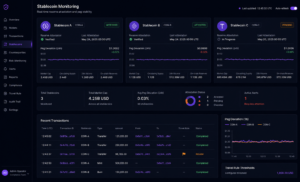
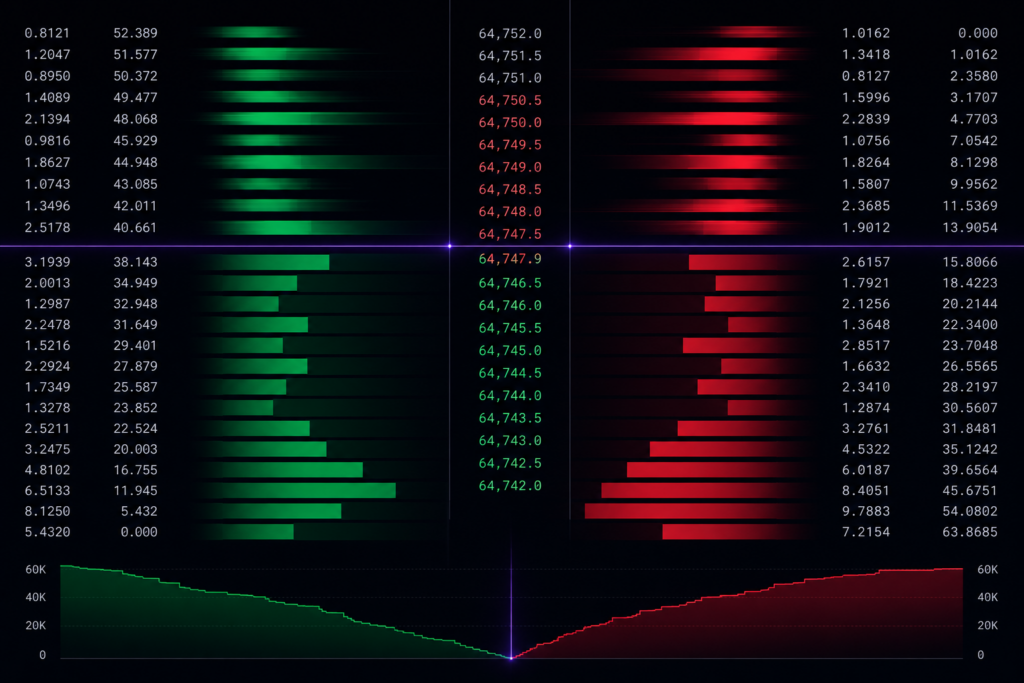
Order book depth visibility and monitoring. A matching engine can be technically sound and still produce poor client outcomes if the exchange doesn’t surface book depth clearly enough for traders to gauge slippage risk before submitting size. Beyond the client-facing view, the operator-side monitoring matters just as much: your ops team needs real-time visibility into queue depth, fill latency, and rejection rates, not a daily batch report. If a problem is developing during a live volatility event, the difference between catching it in minutes versus discovering it from client complaints the next morning is entirely a function of whether your monitoring tooling surfaces engine health in real time.
Beyond the engine itself, verify how it integrates with the rest of your risk stack — specifically whether exposure data updates in real time as fills occur, or whether there’s a reconciliation lag that leaves your risk desk working from stale positions during exactly the high-volume windows when accurate exposure data matters most.
Real-time exposure monitoring — an all-in-one white label brokerage solution that keeps your FX, CFD, and crypto books under a single risk framework rather than reconciling three separate systems after the fact — closes that gap by design rather than as an afterthought.
Ready to see how your exchange holds up under simulated volatility? Book a demo and we’ll walk through load-test results and engine architecture in 30 minutes.
Matching Engine Due Diligence
Does your exchange hold up during a real volatility spike?
CLOB architecture · Sustained throughput · Real-time risk sync
The path from evaluation to production doesn’t require a rebuild. On the Spencer Exchange platform, matching engine architecture, order book configuration, and risk integration are pre-built into the same stack you’re already running FX and CFD flow through — configuration work, not infrastructure work, and typically live within days rather than the months a from-scratch build requires.
Conclusion
You don’t need to solve every matching engine question before launch. Start with the load-test question — sustained throughput, not burst capacity — since it’s the single test most vendors haven’t been asked and the one most likely to surface a gap before your clients do. From there, CLOB versus hybrid architecture and real-time risk integration follow naturally as part of the same evaluation.
Book a demo and we’ll walk through your current exchange stack — or the one you’re evaluating — against these three criteria.
FAQ
What is a matching engine in a crypto exchange?
A matching engine is the software component that processes incoming buy and sell orders against the order book and executes fills based on a defined priority algorithm, most commonly price-time priority under a Central Limit Order Book model.
How fast should a crypto exchange matching engine be?
Latency requirements depend on the trading profile you’re serving. Retail-focused exchanges can operate reliably at sub-100 millisecond order processing, while exchanges serving algorithmic or high-frequency flow require sub-millisecond performance. The more relevant benchmark than raw speed is latency consistency under sustained, high-volume load.
What’s the difference between CLOB and hybrid matching models?
A CLOB matches all orders transparently on price-time priority with no internal market-making layer. Hybrid models blend CLOB matching with an internal market maker that can fill orders directly, which can improve depth in thin books but requires disclosure and introduces execution-quality considerations that a pure CLOB doesn’t have.
Can a matching engine handle both spot and derivatives trading?
Yes, provided the engine architecture separates order book instances per instrument while sharing a common risk and margin layer. This is standard in institutional-grade exchange infrastructure and lets an operator launch spot trading first and add perpetuals or options later without a re-architecture.
How do I test a matching engine before committing to a vendor?
Request load-test results under sustained order flow — not burst capacity — that simulate a realistic volatility scenario: elevated order submission, cancellation, and modification rates sustained over 10-20 minutes. Ask specifically how latency behaves as the queue grows, not just whether the engine processes the target order rate.
Does matching engine choice affect regulatory compliance?
Indirectly. Regulators in most jurisdictions expect brokers to demonstrate fair and orderly execution, and a CLOB’s transparent price-time priority is easier to document and defend than a hybrid model’s internal fill logic during an audit or client dispute.
Should a broker build a matching engine in-house or use a white-label solution?
For brokers without existing exchange infrastructure, building in-house typically requires 12-18 months and a dedicated engineering team before the engine reaches production-grade reliability under load. A white-label platform with a pre-built, load-tested matching engine compresses that timeline to days for configuration against an existing broker stack.